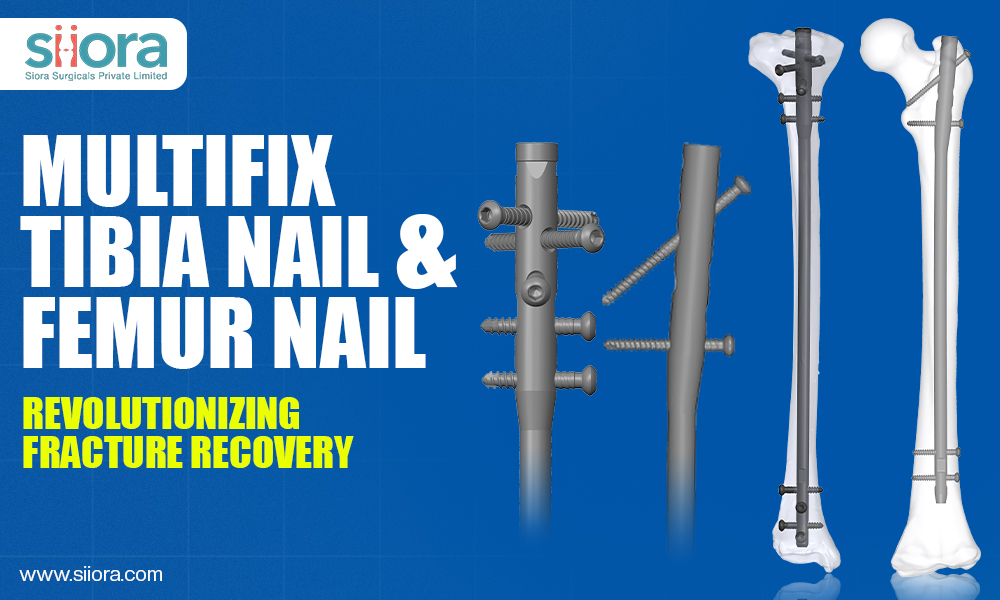
Fractures in long bones such as the tibia and femur have always posed significant challenges in orthopedic care. Historically, treatment methods ranged from casting and external fixation to complex surgeries, often resulting in prolonged recovery and sometimes less than optimal outcomes. However, advancements in medical technology have brought remarkable innovations, with the Multifix Tibia Nail and Femur Nail leading the charge in transforming how fractures are managed today.
The Journey of Fracture Treatment: A Quick Overview
Before diving into the specifics of the Multifix nails, let’s talk about fracture management strategies that were used earlier. Initially, immobilization through casts was the primary approach, but this method had limitations, especially with complex fractures or in cases where bones needed better alignment for functional recovery.
Later, external fixators and plates were introduced, allowing surgeons to stabilize bones more effectively. Yet, these methods sometimes led to complications like infections or delayed healing, and they often restricted patient mobility during recovery.
This is where intramedullary nailing came into the spotlight. Placing a metal rod inside the marrow cavity of the bone offered stability and enabled early movement, which is crucial for healing. The Multifix Tibia and Femur Nails represent a significant leap in this domain.
What Are Multifix Tibia and Femur Nails?
Multifix Tibia and Femur Nails are specially designed intramedullary nails used to fix fractures in the tibia (shinbone) and femur (thighbone), respectively. These nails are crafted with precision from high-quality biocompatible materials, typically titanium or stainless steel alloys, to ensure strength, flexibility, and durability.
Unlike traditional rods, the Multifix nails are engineered to adapt dynamically to the bone’s natural anatomy and movements. Their flexibility, combined with robust locking mechanisms, allows for optimal stabilization without compromising the physiological motions essential for bone healing.
Advantages That Set Multifix Nails Apart
- Early Mobilization
One of the greatest benefits of Multifix nails is that they enable patients to start moving the affected limb much sooner. Early mobility reduces the risk of complications such as muscle atrophy, joint stiffness, or blood clots while promoting better circulation and faster recovery.
- Minimally Invasive Procedure
The implantation of these nails is often done using smaller incisions compared to older methods. This minimally invasive approach reduces soft tissue damage, lowers infection risk, and lessens surgical pain and scarring.
- Optimal Stability and Alignment
Multifix nails provide excellent mechanical stability, allowing the fractured bone to be held firmly in place. Their design ensures that even complex fractures, including those with multiple fragments or varying fracture angles, are aligned correctly to foster natural healing.
- Versatility in Fracture Types
Whether it’s a simple transverse fracture or a comminuted (shattered) fracture, Multifix nails accommodate a broad range of scenarios. This versatility means surgeons can tailor treatments precisely to each patient’s unique needs.
- Reduced Hospital Stay
Thanks to faster healing and fewer postoperative complications, patients treated with Multifix nails often experience shorter hospital stays. This not only benefits the patient emotionally and physically but also eases the burden on healthcare systems.
What Does This Mean for Patients?
For someone facing a tibia or femur fracture, the prospect of months of immobility and discomfort can be daunting. Multifix nails offer hope for a smoother journey toward recovery. Patients find that regaining function, returning to daily activities, and even resuming sports becomes more achievable and less intimidating.
Additionally, because these nails are designed for longevity and biocompatibility, the likelihood of needing revision surgeries is significantly reduced. This long-term reliability translates to peace of mind for patients and their families.
Looking Forward: The Future of Intramedullary Fixation
As technology progresses, Multifix nails are likely to become even more advanced. Integration with smart materials, bioactive coatings that promote bone growth, and possibly sensor technology to monitor healing status are some exciting avenues being explored.
What remains clear is the fundamental impact these nails have already made. They represent a shift from passive immobilization to active, patient-centered recovery that respects both the biological and mechanical demands of healing.
In Conclusion
The Multifix Tibia and Femur Nails have revolutionized fracture recovery by combining innovative design with patient-friendly benefits. They ensure strong fixation, promote faster healing, and support early mobilization, all of which empower patients to get back on their feet sooner and with better outcomes.
Are you looking to partner with one of the top orthopaedic device companies in Dubai? Contact Siora Surgicals Pvt. Ltd., a renowned orthopedic manufacturer in India with a huge global presence.
 Site Title
Leave a comment